
History of Art Assignment Help UK
History of Art is the academic study of images, objects and buildings as historical evidence: how a painting, a photograph, a cathedral or a piece of sculpture was made, what it meant to the people who first saw it, and how its meaning has changed since. A UK degree in the subject — taught at universities including the Courtauld, Oxford, Cambridge, Edinburgh, York and Bristol — is assessed almost entirely through writing: visual analysis essays, comparative essays, historiographical essays, exhibition reviews, catalogue entries and a dissertation. It is not a studio degree. Nobody is marked on their own painting. They are marked on how closely they look, how precisely they describe what they see, and how convincingly they connect an object to the world that produced it.
United Academic Help supplies model answers for History of Art students at UK universities, written to the brief set, with visual description, iconographic reading and historical argument handled in the way markers in this field expect. Models show how an art-historical essay is built: from sustained looking, through the scholarly literature, to an argument that could only be made about this object, in this period, in this place.
History of Art assignment types
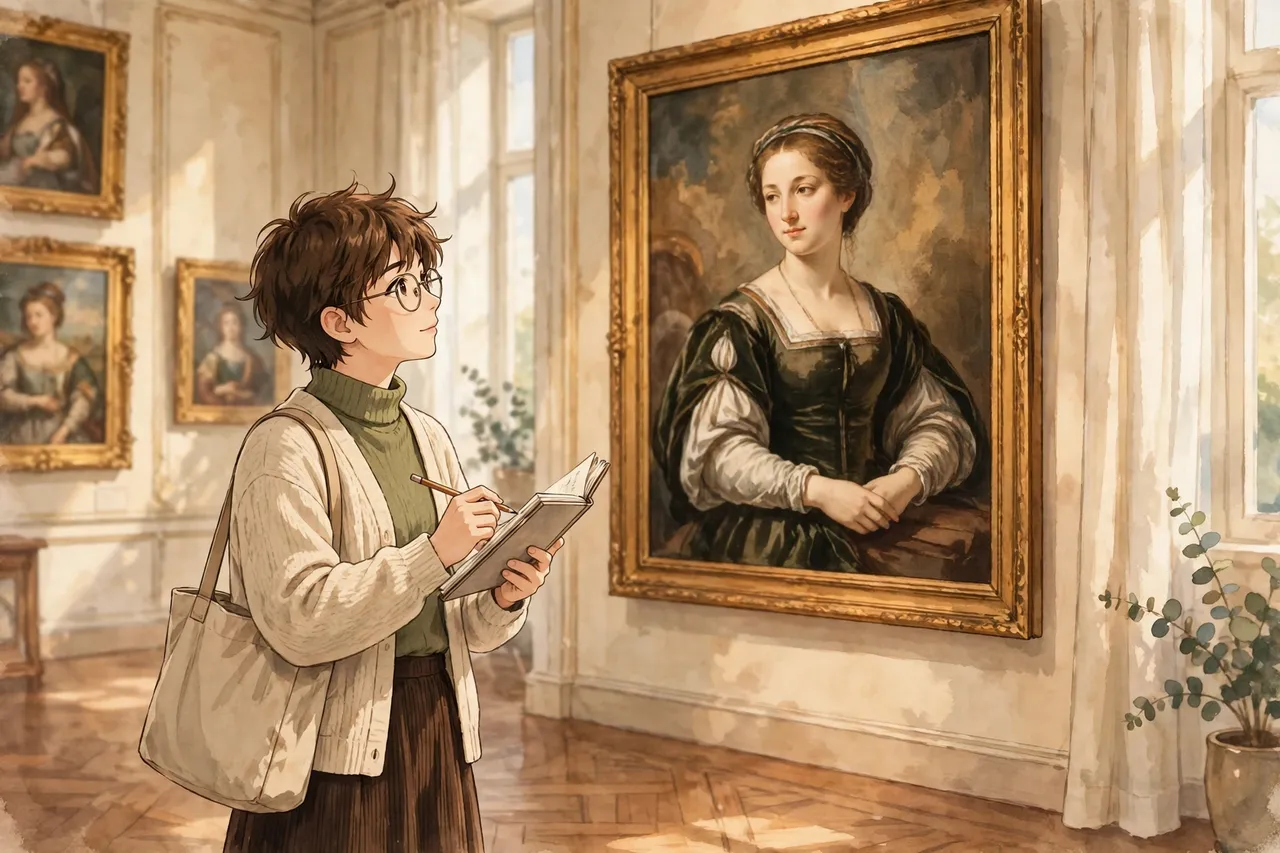
Coursework in History of Art divides into several families, and each has its own standard. Visual analysis assignments — sometimes called formal analysis — ask students to describe a single work in detail and argue from what is visible: composition, colour, light, scale, medium, surface and facture. Comparative essays set two or more works against each other and require a thesis that explains both the resemblance and the difference. Iconographic and contextual essays ask what an image depicts and what it meant, drawing on texts, patronage, religion, politics and display. Historiographical essays ask how scholars have interpreted a work or a period differently over time. And applied assignments — exhibition reviews, catalogue entries, object labels — test whether scholarly knowledge can be communicated to a public audience without being dumbed down.
- Visual analysis essays on a single painting, sculpture, photograph or building, argued from close observation.
- Comparative essays that use difference — between periods, places, media or patrons — to drive an argument.
- Iconographic essays on subject matter, symbolism and the texts or traditions behind an image.
- Historiographical essays tracing how interpretation of an artist, movement or work has changed.
- Exhibition reviews and catalogue entries written for a general reader but grounded in scholarship.
- Dissertation models, commonly a focused study of one artist, theme, collection or episode of reception.
The common thread is evidence. An art-historical claim that cannot be tied to something visible in the work, or to a document, a patron’s accounts, a contemporary text or a display history, is an opinion rather than an argument. Model answers make that chain visible: description first, then the scholarly context, then the claim the two together support.
Visual analysis: describing before interpreting
The technical heart of the degree is looking. A visual analysis essay fails most often not through ignorance of history but through thin description: a paragraph of generalities about a painting the writer has evidently not spent time with. Strong answers slow down. They note the format and scale — is this a small devotional panel meant for close, private viewing, or a vast altarpiece designed to be read from a nave? They track how the eye is led, where light falls, how colour is distributed, what is in focus and what is left unresolved, how the surface is handled — smooth glaze or visible brushwork, carved detail or rough stone. They distinguish what is depicted from how it is depicted, because in art history the how is often the argument.
Model answers demonstrate that discipline. A description of a portrait, for instance, will note pose, gaze, dress, setting and attribute, and only then ask what social claim the portrait is making. A description of an abstract work will attend to edge, layering, scale and material rather than hunting for a subject that is not there. The habit transfers across periods: whether the object is a Roman sarcophagus, a medieval manuscript page, a Baroque ceiling or a contemporary installation, the essay earns its marks by proving, in its opening pages, that the writer has actually looked.
Iconography, context and patronage
Beyond description, History of Art essays place works in the circumstances of their making and reception. Who commissioned this work, and for what space? What did its first audience already know — the biblical story, the classical myth, the political allegiance — that a modern viewer must be told? How did the work’s function shape its form: an altarpiece organised for devotion, a history painting staged for a Salon jury, a poster designed to be read from a moving train? Assignments in this family reward students who can move between the object and its archive: contracts, inventories, letters, guidebooks, criticism and earlier images of the same subject.
The best answers keep interpretation proportionate to evidence. A symbol is not decoded by free association; it is identified through the texts and images of its own time, and the essay says so, citing the source that establishes the reading. Equally, a work is not reduced to its patron’s intentions: reception matters, and a painting that failed in its own day or was reinterpreted by later generations offers a different, often richer, argument. Models show that balance — context used to illuminate the object rather than to replace it, and later readings treated as part of the work’s history rather than as mistakes to correct.
Historiography: arguing with the scholarship
At second and final-year level, and throughout master’s study, essays increasingly ask students to engage with how art history itself has been written. The same artist can appear as a genius, a craftsman, a political agent or a symptom of a market, depending on which generation of scholarship is consulted. Assignments ask students to compare those accounts, to identify what each approach reveals and conceals, and to position their own reading among them. This is where the subject becomes genuinely argumentative: the student is no longer summarising what scholars say but adjudicating between them.
Model historiographical essays state each position fairly before criticising it, identify the evidence each scholar relies on, and show how a methodological choice — social history, formalism, feminist art history, postcolonial approaches, technical art history — produces a different object of study. They also show the limits of revisionism: a new reading that ignores the work’s material facts is no improvement on an old reading that ignored its politics. The conclusion a marker rewards is not the most fashionable position but the best-evidenced one.
How History of Art models are prepared
Preparation begins with the brief and any images, exhibition material or marking scheme the student provides. The first step is to identify the kind of judgement the assignment requires: a visual argument from a single work, a comparison, an iconographic reading, or a historiographical adjudication. That identification shapes the structure, because a formal analysis and a historiographical essay do not follow the same logic, and a model that confuses them will mislead even if its content is accurate.
Drafting follows the conventions of the field. Works are identified fully on first mention — artist, title, date, medium, dimensions and location where relevant — and described in the present tense. Illustrations are referred to as figures and discussed in the text, not left to speak for themselves. Scholarship is cited properly, with exhibition catalogues, monographs and peer-reviewed articles weighted above general websites, and the draft is checked for the field’s characteristic errors: description that drifts into biography, interpretation asserted before the visual evidence is established, and a conclusion that merely repeats the introduction.
Why History of Art students ask for a model
Many History of Art students arrive with enthusiasm for looking and little training in writing about what they see. School essays may have rewarded personal response; university essays reward argued description, and the gap between “I like this painting because it feels melancholy” and “the painting produces melancholy through these specific pictorial means” is the whole degree. Others know the history but write essays that are really history essays, with the artwork mentioned only in passing. A model answer shows the standard in practice: the artwork at the centre, the scholarship in service of it, and the argument built from the visible.
A model also helps with the subject’s particular anxiety: the blank page in front of an image. Students often report spending hours looking without knowing what to write down. Seeing a worked analysis — description organised into an argument, with each paragraph earning its place — gives them a method for the next image they meet alone. Prices for model answers in this subject start from £20 per 1,000 words, depending on level, length and deadline.
Exhibitions, catalogues and public writing
Applied assignments deserve separate attention because they reverse the usual direction of the subject. An exhibition review or catalogue entry is not a shorter essay; it is a different genre, written for readers who may never have studied art history but who are standing in a gallery, or about to. The writer must select: which three facts about this artist actually change how the visitor sees the work, and which scholarly debates can be left out without dishonesty? The tone must be accessible without becoming chatty, authoritative without becoming a lecture.
Model applied writing demonstrates that selection. A catalogue entry will give the essential facts, one telling detail of making or meaning, and one interpretive claim the reader can test against the work in front of them. An exhibition review will judge the hang and the argument of the show, not merely list its contents — does the juxtaposition of these rooms make the curatorial thesis, or undermine it? Students who learn this genre gain a professional skill as well as marks: much paid work in the art world, from gallery texts to auction entries, is exactly this kind of writing.
History of Art assignment questions
Can you help with visual analysis essays?
Yes, visual analysis is the core of the service in this subject. Models build the argument from sustained, organised description of composition, colour, light, scale and surface before any interpretation is offered.
Do you cover all periods, from ancient to contemporary?
Yes, models are written to the period of the brief, whether that is classical antiquity, medieval art, Renaissance and Baroque, modernism or contemporary practice, with scholarship appropriate to the period.
Can you help with exhibition reviews and catalogue entries?
Yes, applied writing is modelled in its own genre: accessible, selective and evidence-based, with the visitor or reader — not the marker alone — in mind.
What about historiographical essays?
Yes, historiographical models compare scholarly positions fairly, identify what each approach reveals and conceals, and reach an evidenced conclusion rather than a fashionable one.
Can you help with a History of Art dissertation?
Yes, dissertation models cover question definition, literature, visual and archival method, chapter argument and conclusions kept within the evidence of the works studied.
Is the model answer something I can submit as my own work?
No, it is a study aid and worked example. Study how it describes, compares and argues from visual evidence, then write your own submission in your own words, following your university’s academic integrity rules.
Beginning a History of Art model
If a painting will not resolve into an argument, a comparison has two descriptions but no thesis, or a historiographical essay is summarising scholars instead of adjudicating between them, send the brief together with images of the works and any draft you already have, and say which part is causing the difficulty. A focused starting point — one work, one comparison, one debate — usually produces the most useful model, because the method it demonstrates transfers to the next object you meet. United Academic Help will shape the model to your brief and deadline, so you can study its structure, check its looking, and then write with a clearer sense of the standard your markers expect.