
Media Studies Assignment Help UK: Theory, Film Analysis and Production Commentary
Quick answer: We help UK media studies students with media theory essays, film and television analysis, audience and industry studies, news and representation assignments, and production commentaries — by producing fully referenced model answers from £20 per 1,000 words on our published pricing scale. Media studies marking rewards precision: theory named and applied to specific sequences, scenes and texts — never floated above them. Our models are built that way, with close analysis of actual media texts doing the arguing and theory earning its place by what it reveals in them. Send your essay title, brief or production task on WhatsApp for an exact quote.
Media studies students start with an advantage and a trap. The advantage: genuine fluency in the material — you have watched more film and television, more attentively, than students in most subjects have read of theirs. The trap: essays written at the level of that fluency, as sophisticated viewing diaries, when the discipline demands analysis of how texts are constructed, circulated and made meaningful. Feedback says “descriptive”, “theory not applied”, “where is the sequence analysis?”, and each comment marks the distance between consuming media expertly and studying it. That distance closes fastest when you can see the academic version of your own viewing — a model that takes a text you know and does the disciplinary work on it, visibly. We have supported 1,000+ UK students, and media briefs arrive from A-level through to Masters.
The work we cover
Media theory essays
The field’s working frameworks applied, not recited: representation and semiotics, narrative theory, genre theory, ideology and hegemony, the political economy of media industries, audience theory from effects through active audiences to fandom and participatory culture, and medium theory for digital and social platforms. Theory earns marks in media studies exactly as elsewhere — in contact with a text, case or dataset.
Film and television analysis
Sequence analysis done properly: mise-en-scène, cinematography, editing and sound read as choices producing meaning, tied to the essay’s argument rather than catalogued. Auteur and genre readings, national cinemas, documentary forms, and television-specific analysis (seriality, scheduling heritage, streaming-era form) are all covered, including comparative scene work across two texts.
Audiences, industries and news
Essays and reports on media institutions and their audiences: conglomeration and regulation, public service broadcasting, news values and framing, misinformation, and platform power. These topics reward up-to-date evidence handled critically — industry data and current cases selected to test a claim, not to demonstrate that you read the news.
Production work and commentaries
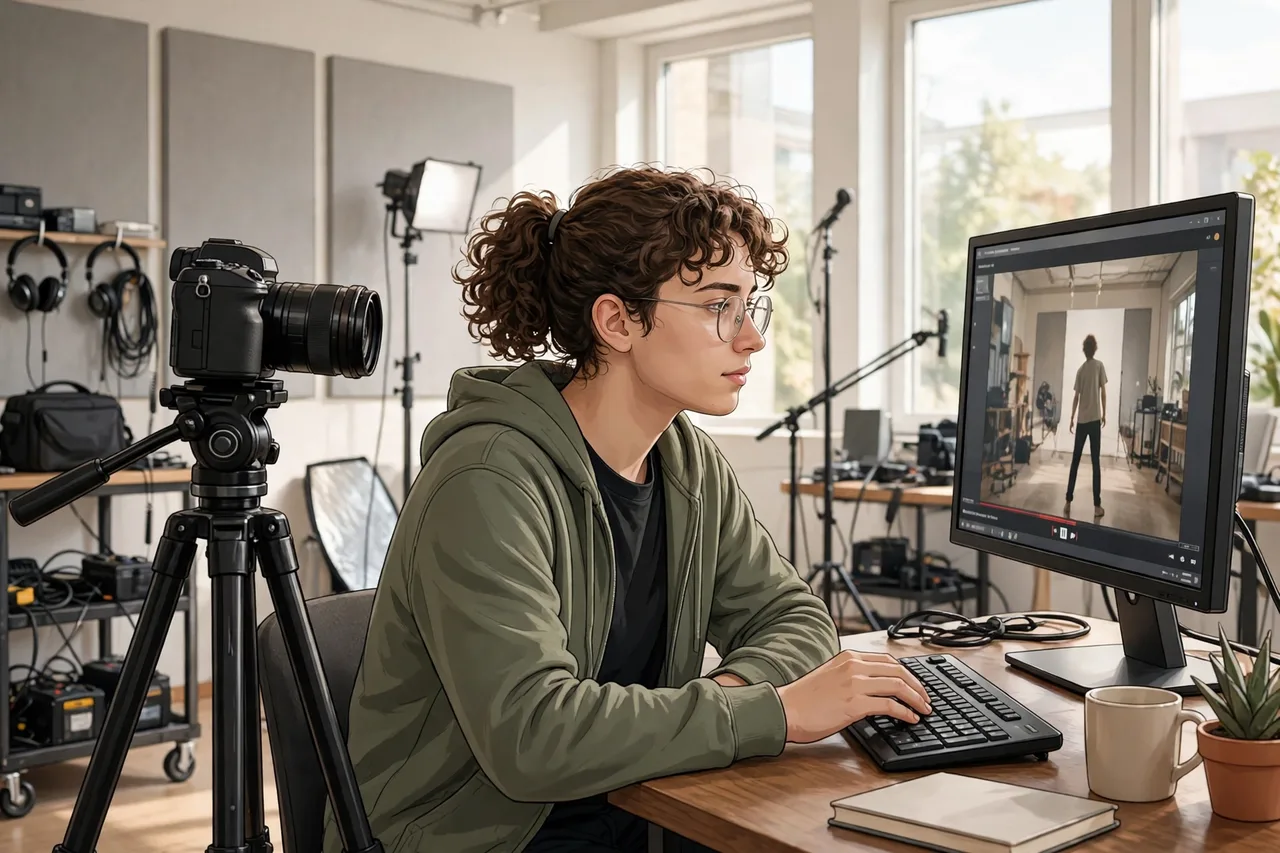
Many media courses pair a practical artefact with a written commentary or critical evaluation, and the commentary is where the academic marks sit. We support the written component: commentaries that connect production choices to theory and research, evaluations that analyse rather than celebrate the finished piece, and production reports structured to the rubric. If your project is a dissertation with a practical element, our dissertation help page covers the written side chapter by chapter.
The theorists and frameworks markers expect — applied, not listed
Media essays are populated by a recognisable cast, and markers award marks for what each thinker is made to do to a text. Stuart Hall appears twice in most syllabuses — encoding/decoding for audience work, representation for how meaning is constructed rather than reflected. Roland Barthes supplies the semiotic toolkit (denotation, connotation, myth) that close analysis runs on. Marshall McLuhan (“the medium is the message”) anchors medium-theory arguments about platforms and form. George Gerbner’s cultivation theory and the older effects tradition — the hypodermic model, two-step flow, uses and gratifications, the spiral of silence — form the audience-theory spine that essays are expected to move beyond intelligently, not repeat uncritically. Jean Baudrillard (simulacra and hyperreality) does the heavy lifting in digital and celebrity-culture topics, while David Hesmondhalgh and the cultural-industries tradition frame ownership and industry questions, and agenda-setting and framing organise news analysis. For journalism, advertising and public relations modules we also cover the applied frameworks those courses set — campaign planning models such as PESO (paid, earned, shared and owned media), press-release and media-pack formats, and critical discourse analysis in the Fairclough tradition for news texts. Our models typically work one or two of these hard against a chosen text or case; a paragraph each on six theorists is the shape of a second-class essay, and we will not build you one.
Where media studies marks are actually lost
The feedback repeats across institutions. Retelling the text: plot and content summarised as if the marker had not seen it. Film-language garnish: “a low-angle shot is used” with no account of what the angle does — technique named, effect missing. Theory in a separate universe: a paragraph of Hall or Baudrillard that no subsequent paragraph ever uses. Representation essays that only count: who appears and how often, without analysing how meaning is constructed and contested. And commentaries that narrate the production diary: what happened each week, where the criteria asked what was decided, why, and what the theory says about it. Our models are structured against exactly these losses — analysis anchored to named sequences and moments, theory admitted only when it is about to be applied, and evaluation that risks a judgement.
How it works
- Send your assignment on WhatsApp — the title or brief, the set texts or the text you have chosen, your level and deadline.
- Get an exact quote in writing, on the published scale, confirmed before any work starts.
- A media specialist produces your model — close textual analysis, theory applied to it, referenced in your university’s style.
- Study the model, ask questions, request free revisions — the explanation is part of the service; if an analytical move is not clear, ask until it is.
Planning a media dissertation or a long production project? Stage the written work with our free assignment deadline planner, which forces the commentary and evaluation stages — the ones students schedule last and markers weight most — into the plan from the start.
Writing about digital media without chasing novelty
Digital topics seduce students into a specific error: treating newness as analysis. An essay that catalogues the latest platform feature or this month’s viral format will date before it is marked and argues nothing in the meantime. The durable approach treats platforms the way earlier generations of media scholars treated broadcasting — as arrangements of production, distribution and attention that older, well-tested questions still organise: Who owns this, and what does ownership make likely? What does the form encourage and discourage? Where does the audience’s activity create value, and who captures it? Political economy, representation and audience theory all survive contact with social media precisely because they ask those questions rather than describing surfaces. When current examples are used — and they should be, since media studies marks contemporary awareness — they earn their place as evidence for a claim the theory frames, and the essay states what would count as evidence against it. Models for digital briefs are built on that pairing: a framework with a track record, a current case that genuinely tests it, and conclusions stated at the size the case can carry.
Media studies assignment questions
Can you analyse a specific film or episode I choose?
Yes — send the title and the sequences your seminar has focused on, if any, and the model will be built on that text with time-coded, specific analysis rather than generic commentary.
My course is mostly practical — can you help with just the written parts?
Yes, and it is one of the most common media requests. Commentaries, evaluations and production reports are discrete written assignments with their own rubrics; a model shows the analytical register those rubrics reward.
Do you cover social media and digital platforms topics?
Yes — platform studies, influencer culture, algorithmic curation and online communities are current core topics. These briefs date quickly, so models use recent scholarship and current platform cases.
Which referencing style do you use?
Harvard is most common in media studies; film and television references have their own conventions (director, year, distributor), which our free Harvard referencing generator will not build for you but every model includes correctly as standard — and we follow whatever your handbook specifies.
Can you help with scripts, storyboards and production proposals?
Yes — the documents around production, as distinct from the artefact itself: script formatting to industry convention, storyboards, documentary treatments, production proposals and the creative rationale that explains your choices. These are marked against industry and rubric conventions rather than essay structure, and the model follows whichever your brief specifies.
Do you cover A-level media studies as well as degrees?
Yes. A-level media (AQA, Eduqas and WJEC specifications) is built around set products and the theoretical framework — media language, representation, audiences and industries — and coursework (the NEA) carries its own brief-specific conventions. Send your specification and the set products you are studying, because analysis is marked against them, not against media in general.
Is urgent help available before a deadline?
Yes — media work is covered by the same urgent rates as everything else; see urgent assignment help for the 24- and 48-hour scale. If the brief involves a specific sequence or episode, include timestamps or the scene description when you write — locating the exact passage is the part of urgent analysis that cannot be compressed.
Research-based media assignments
Not all media coursework is textual. Content analyses, audience questionnaires, interview projects and small ethnographies appear from second year onwards, and they are marked by a double standard students often miss: the methods are judged with social-science rigour while the writing is still expected to do media-studies analysis. The recurring weaknesses are specific. Samples recruited by convenience and generalised as if they were publics — twenty friends are a pilot, not an audience, and saying so honestly scores better than pretending otherwise. Content-analysis categories invented mid-coding, where the method requires categories defined in advance and applied consistently, ideally tested by a second coder. Findings reported without returning to theory — the results chapter describes the data and stops, where the marks sit in what the data does to the framework the introduction set up. And ethics treated as a form rather than a section: consent, anonymity and the handling of online material are examinable content in media research, not administration. Models for research-based briefs demonstrate the full chain — question, method justified against alternatives, findings, and an analysis that closes the loop back to theory. If the numbers themselves are the obstacle, our statistics assignment help covers the quantitative side, and the samples page shows worked examples of research writing before you commit to anything.
Get media studies assignment help today
Send your essay title, brief or production task on WhatsApp for a free, exact quote — no obligation, and completely confidential.
Chat on WhatsApp for your free quote · Or email team@unitedacademichelp.uk
Writing about audiences from the research side? Our sociology assignment help page covers media and culture topics sociologically, and our English literature assignment help page covers close-reading essays.